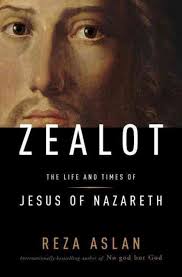
Reza Aslan’s Zealot: The Life and Times of Jesus of Nazareth –Jesus’ Exorcisms and Miracles

index

I never doubted that Jesus existed; however, I have questioned some of the elements of his story, as conveyed through the Gospels. In particular, I doubted these supposed miracles he performed. My reading of the New Testament did little to dispel this impression—really, the man walked on water? He turned water into wine? He cured ailments with a touch of his hand? The fact that people—even well-educated people—accepted these miracles based on a rather old, and often contradictory book baffled me. To make matters worse, not to be mean, but I questioned how a healthy number of these believers denounced homosexuality, choosing not to accept the fact that gay people are born the way we are. The fact that our sexuality is dictated through the development of our brains and is as natural as being right or left handed is crazy, apparently.

So, when I began Zealot, I was curious to see how Aslan would address Jesus’ miracles. Of course he does, and he also takes on Jesus’ exorcisms. What he has to say about both these surprised me, in how they happened and why people reacted to them/Him the way they did.

According to Aslan, “in first century Palestine, professional wonder worker was a vocation as well established as that of woodworker or mason, and far better paid” (103). Because the actions attributed to Jesus were relatively common and accepted at the time, Aslan suggests that trying to disprove any of them individually is a waste of time—what is important is how people back then viewed Him. They saw Him as a miracle worker. Furthermore, he says that there is far more “accumulated historical material” (104) than about either His death (that famous crucifixion) or even His birth. In other words, he suggests that we accept the miracle work detailed in the Bible.

For the curious, Aslan even provides several names of other well-known miracle workers and exorcists during that time (105-6). It’s interesting to see how much more there was to this era not covered in the Bible.

I would have liked to hear more about specific miracles, such as how a crowd of five thousand could be convinced that a person turn a few loaves of bread and a couple fish into a feast; however, what is more interesting is understanding better why Jesus’ miracle work really rubbed people the wrong way. If Jesus was only doing business as so many others, why then was he a threat? Why did he becomes such a huge target? Simple: Jesus did it all for free. According to Aslan, given that His competition apparently earned healthy livings by working their own magic, He was bad for business. This threat to their industry had to be handled.

It’s sad that even back then, money influences bad decisions.

Although Aslan provides a thoughtful, interesting, and well-documented discussion of this particular aspect of Jesus’ life, I still don’t know how much of the miracle-working I buy. But whether or not Jesus walked on water doesn’t impact my life one way or another. If people believe and are better for this belief, have at it. Still, reading about the era does present a more well-rounded impression of Jesus for me, and although I don’t necessarily believe everything about Jesus, I do have a better appreciation for what the Gospels discuss. This exercise shows that with a little research, a better understanding—and tolerance—can be achieved. Now if all of those who choose to believe Jesus’ miracle working would do the same in regards to the homosexual “lifestyle” they choose to have an opinion about, my community would be better off.

Next up: Apparently, Jesus had quite a temper.

Posted in Aslan's Zealot | Tagged , , , , | Leave a comment

Reza Aslan’s Zealot: The Life and Times of Jesus of Nazareth – Understanding Jesus

index

Before I read the Bible in 2013 for this project, I thought Jesus a kind soul, who wandered desert towns spreading love, washing the feet of the poor, hugging those in need, and, ultimately, sacrificing his life for all of humanity. I may not have bought the whole son of God angle, but I always assumed Jesus had been a real person and, give or take a miracle or two, did the things attributed to him.

My reading of the New Testament in general, and the gospels in particular, pretty much confirmed my impression of Jesus. My interest in learning the details of his life guided my reading, which provided interesting color to this general impression. For example, as the fig tree story demonstrated, Jesus had a temper, which endeared him to me—even men of love can have a tantrum now and then. He appeared more human.

Having finished the Bible and moved on to outside texts in order to enhance my understanding of the Bible, I have encountered very little that dealt specifically with Jesus. Given his importance, though, I knew I wanted to investigate books that did. As always, I found a recommendation in an unlikely place.

In the summer of 2013, I watched the brutal CNN interview that went viral with author Reza Aslan (now-famous appearance on Fox News). Having just released a book about Jesus, Aslan was making the promotional rounds. I was in the middle of reading the Bible, so I had not yet developed a strong sense of the New Testament, but I was intrigued enough by the clip to buy his book. If an author who explores the principal character in the New Testament can get a reporter at Fox News that riled up, I had to read Zealot: The Life and Times of Jesus of Nazareth.

So I did.

Based on the negative reactions to the book (which are outnumbered by the well-deserved positive praise, incidentally), I expected a book that aimed to go after Jesus for the purposes of tearing down the man, his image, and his place in Christianity. This book doesn’t. Instead, Aslan embraces much more of the Biblical Jesus than I thought a scholar would, such as the miracles. Even more interesting is the fact that for much of his reasoning, he relies primarily on a Greek-language New Testament (which he translates himself), cites specific scriptural examples, as well as outside sources, such as Apocryphal books and historical documents that discuss the era. If anything, he goes to great lengths to express his respect for Jesus. He aims to understand Jesus the man before he became Jesus the Christ.

He begins by understanding the world in which Jesus lived. And that world is fascinating.

For the next few posts, I will discuss what Aslan has to say about Jesus and the era in which he lived. He presents a lot of fascinating information that rounded out my understanding of the New Testament.

First up: Aslan’s discussion of Jesus miracle work and exorcisms.

Posted in Aslan's Zealot | Tagged , , | Leave a comment

Michael Cobb’s God Hates Fags: The Rhetoric of Religious Violence –The Changing Tide within Churches, The Vatican, and Looking Forward

Michael Cobb’s God Hates Fags: The Rhetoric of Religious Violence –The Changing Tide within Churches, The Vatican, and Looking Forward

I avoid using the “F” word as much as possible, and repeating it in every post while discussing Michael Cobb’s book has been a challenge. But as Cobb would likely say—as evidenced throughout his well-developed arguments—there are times when avoiding certain words can be dangerous. Since the “F” word is used against us so often, it’s easy to steel ourselves, try and ignore it. But we can’t pretend it’s not being said, as much as we might want to.

There are a number of useful points to take away from God Hates Fags: The Rhetoric of Religious Violence. In my previous six posts, I’ve addressed most of them. But, as he wraps up his book, he asserts two important things. First, we can be more than the rhetoric, the names foisted on us (183). Here, he’s suggesting we find ways to rise above all the hateful language—and the accompanying behavior and attitudes. He also cautions that we need to pay attention to hate as well as hate’s language (183).

If left unchecked, this negativity will fester, and although he doesn’t make this point explicitly, it’s worth saying: we need to come together as a community to stamp out this hate. But, like any fight, we need allies, and, thankfully, there seem to be people willing to help—and do so publicly.

Recently, at a Southern Baptists conference in Nashville, one of the key messages delivered told the gathered pastors: hold the line on gays and stand up for heterosexual marriage. After all, gay relationships are sinful. They are a real challenge to us on Biblical authority. So this is nothing new (and still troubling). Yet, the speaker urged people to “be humble and compassionate.” Thankfully, one of these people went so far as to admit that trying to “change” gays is wrong, that gay children should not be shunned, gay bullying should be condemned, and we need to “repent our anti-gay rhetoric.”

And of course, there are the collection of remarks made by Pope Francis, who has not only remarked “Who am I to judge Gay people?” but has also made attempts to compel the Church to be more welcoming to gay people in general. This stance has, of course, been met with unfortunate skepticism. But it is a positive start.

I’d like to think that this blog project is also helping—in my own small way. In reading the Bible and continuing to engage with the content through subsequent books, I’ve engaged religious individuals by taking the time to read about their ideas. It’s important to try and understand people, even if you don’t agree with them.

Next up for the Bible Blog Project: I tackle Reza Aslan’s Zealot. I’ve been curious about this academic’s examination of Jesus ever since I saw his now-famous appearance on Fox News. If you haven’t seen this clip, I highly recommend it, for this is fairly telling of how an “expert” on religion (the host of the show) exercises ignorance and bigotry without even noticing what she’s really saying.

I will begin my discussion here in the new year.

Posted in Michael Cobb's God Hates Fags | Tagged , , , , , , , | Leave a comment