The Bible’s New Testament: The Book of Acts I – The Church Struggles to Grow

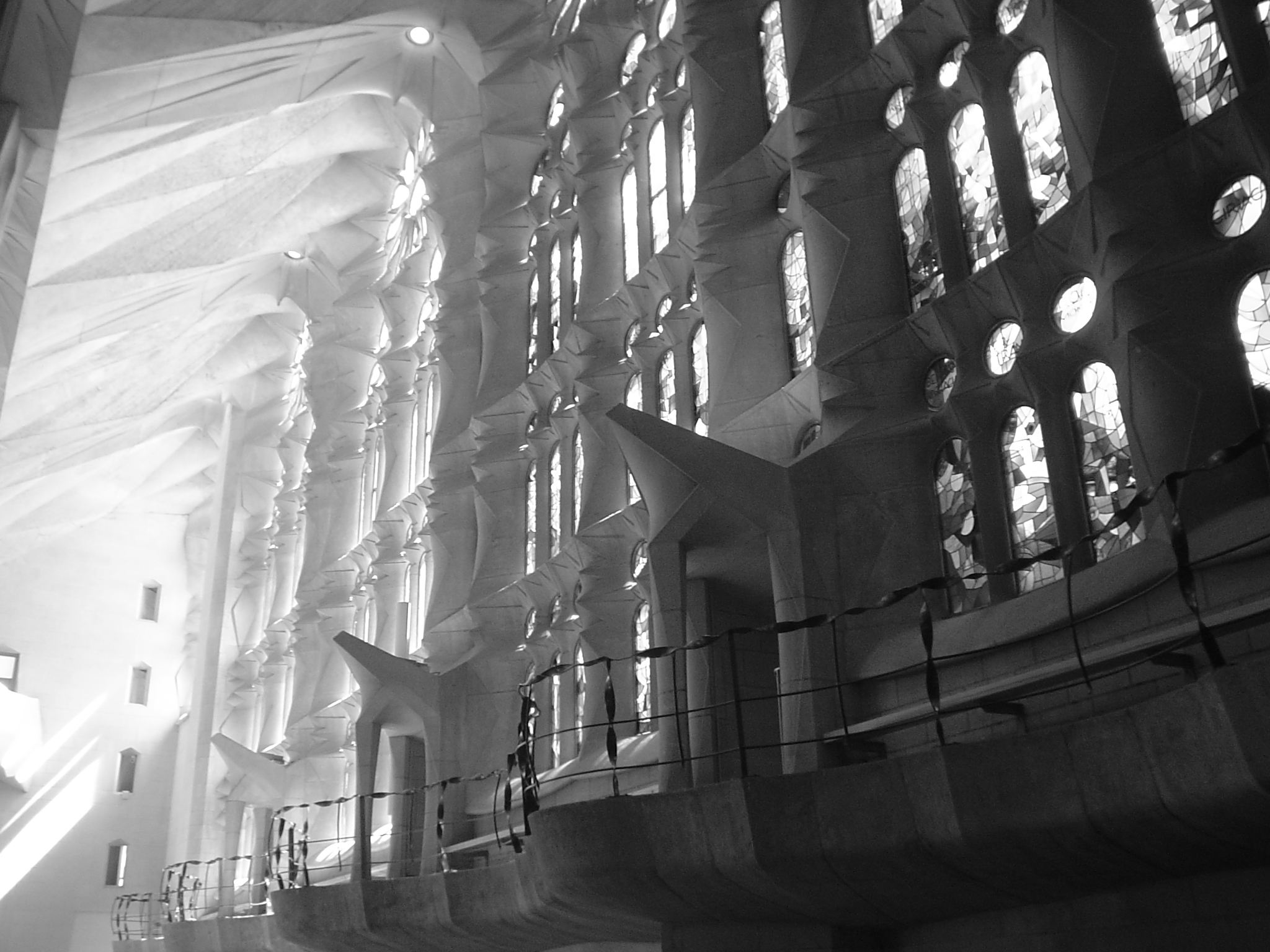
Inside the Sagrada Familia

Inside the Sagrada Familia

I was recently in Spain; specifically, we visited Barcelona, Madrid, and Seville.  Aside from the wonderful cheeses, wine, and architecture, as you might imagine, we visited more than one church.  In fact, especially in Barcelona, it seemed like we couldn’t walk more than a few blocks in the old section of the city without running into a beautiful structure dedicated to Christianity.  Just when we thought we’d seen a stunning church, there’d be another one grander, more elaborate. The most spectacular—Sagrada Familia—isn’t even finished after over a hundred years of construction.

Impressed with some many spectacular churches, I almost had a hard time believing there had ever been another religion in the city. And Barcelona is of course not the only city with such a strong display of Christian reverence. This showing is so pervasive, it’s interesting to read how this religion got off to such a rocky start.

The Book of Acts picks up after Jesus’ resurrection and his apostles carry the torch. Hence, trying to spread the message of “The Way” is difficult. And not in the Calculus-is-difficult kind of way; no, difficult as in being a follower could get a person killed. Turns out, those in power are not looking to have yet another religion try and infiltrate the people.

But one voice speaks on their behalf. Sort of. A teacher of the law, Gamaliel assumes that resistance will only bolster their growth, so he has advice for his colleagues: let them preach, these followers of “The Way.” If you attempt to stop them, he says, the plan will fail.  Even more interesting is the evidence he uses to support his stance: look what happened in the case of two different terrorists (5:36-37). Apparently then as now, terrorists existed. His two examples showed how two men were able to radicalize small revolts with bad results. He adds that if God is on their side (as they claim) then you will ultimately not be able to stop them anyway (5:39).

But this sage advice doesn’t prevent Stephen, an apostle, from getting stoned (7:59). Nor does it curb the efforts of Saul who ventured from house to house and dragged off men and women and imprisoned them (8:3). Still, people were not swayed from their beliefs, even in the face of this severe punishment.

I wouldn’t say that the early struggles should compel people to embrace Christianity, but it should provide a sense of all the trouble a number of people went to in order to spread the message of what they believed. On the heels of the life of Jesus, this story is pretty impressive and provides some insight that a power (the church), whose power is so pervasive today, actually worked pretty hard to get it.  It certainly wasn’t handed to them, nor did they wage a war to secure their position. I’d be lying if I didn’t say that I wished the church were a bit more humble, a bit more compassionate towards those who do not hold their same beliefs, given their humble roots.

Posted in Acts, Book of Acts, The New Testament | Tagged , , , , , | Leave a comment

The Bible’s New Testament: The Gospels II– The Whole is Greater Than the Sum of Its Parts.

I was in a band in college.  I’d played with a couple friends near the end of high school, but when I was living in San Diego, I met two guys who needed a bass player.  I was clearly under-skilled to be playing with them, but I learned my parts. I had a steep learning curve, however, and I often was the one throwing off the song by either playing out of tune or in the wrong key. I garnered a few dirty looks—when everyone else is pulling his weight, it’s a drag for to be the guy throwing everything off.

In my defense, I wasn’t doing it on purpose, although that didn’t matter: the song was sounding different than intended, as in I was playing some different version. To most people this sounded bad.  As in wrong.

The Gospel also provides its share of seemingly “off” notes.  Specifically, elements that offer different or skewed accounts of events.  And these differences are significant.  I don’t know that anyone should say the Gospels presented incorrectly moments of Jesus’ life, but what I will say is that how they depict his final hour is VERY revealing, in part because of how different these versions are.

Whereas Matthew and Mark report that Jesus expressed doubt in his ninth hour (Matthew 27:46; Mark 15:34), Luke has Jesus offer his body to God (23:46).  John provides yet a different take of this moment. Jesus acknowledges that he is about to die, and since he accepts that the prophesy is about to be fulfilled with his death, he says he’s thirsty. Somebody soaks a sponge and wets his lips, and then, satisfied, he says “it is finished” and dies (19:30).

Why the difference?

Matthew and Mark offer the most drama (and interesting that these two share the same account).  Perhaps it shows that even Jesus had his doubts but then changes his mind by being resurrected?  Luke seems the most commanding—Jesus is in control, offering his spirit to God.  This would instill trust in his followers? John, however, offers a mere acceptance, a relinquishing of his body, as if, after an exhausting journey he can now rest.

I don’t know how to mesh these three versions, as they differ too widely to complement one another.

The first three Gospels also don’t paint a favorable impression of the religious leaders in Jerusalem.  These are the guys who were so threatened by and jealous of Jesus that they plotted to have him crucified.  Evil, right? But is there a bit more to the story? The Gospel of John contains a detail that allows for a slightly different read on their actions: they were just helping fulfill the prophecy and thereby allowing Jesus to attain his true place in heaven. This feels problematic for a number of reasons, which I’ll get to in a minute.

At a meeting of the Sanhedrin, the chief priests and Pharisees plot to kill Jesus.  Among them, Caiaphas, speaks up: “You do not realize that it is better that one man die for the people than the whole nation perish” (11:50).  He had prophesied that Jesus would die for the Jewish nation as well as all children of God (11:51-2).  This is included to justify why they plotted to take Jesus’ life.

On one hand, according to the first three Gospels, we are supposed to see the wrong in their decision to push for Jesus’ crucifixion. They were jealous, worried they would be marginalized, etc.  It’s not a stretch to see what happened to this great leader as terrible, etc. But John offers an element that it was supposed to happen.  Although all the Gospels contain Jesus’ prophesy, here we learn that the people in power had one as well. If so, should these priests be blamed or congratulated for bringing about the events that lead to Jesus’ death and resurrection?  After all, without these events, Jesus would not have been able to die for man’s sins. This feels problematic—this makes it clear that this was the ONLY way people would get the message and could be “saved”?  What would have happened to Christianity if Jesus hadn’t been crucified?

The priests are not the only figures whose depiction changes.  Matthew and Mark offer a consistent portrait of Judas—he was greedy.  Luke changes this to suggest that he was possessed by Satan. This softens the greed a bit—it wasn’t his fault, Satan made him do it.  Is this meant to strike a sympathetic chord with the audience then? John perhaps anticipates this depiction.  Although John echoes Satan’s role, this Gospel goes a step further: Judas was a thief. When questioning the use of expensive perfume on Jesus—it could have been sold and the money given to the poor—he is shown as shifty: “as keeper of the money bag, he used to help himself to what was put in it” (12:6).

Perhaps being possessed would excuse his actions and so this new detail confirms, no, this guy was always bad news. He doesn’t just sell Jesus out, but is completely morally bankrupt. Being a thief speaks to a character flaw, not a momentary bad lapse in judgment.

So what picture of the life of Jesus do these four Gospels paint?  They show a man called to undertake a monumental task and did so—for the most part—without complaint.  Even if you choose not to believe the miracles—the healing by touch, resurrecting people, etc.—you can still see why people gravitated towards this man.  In an age (then and perhaps now) when reason and common sense were not so abundant, he arrived to correct some outdated ways of thinking, challenging authority, and attempting to leave the world a better place than when he found it. For the people who choose to hold this image, they will probably discount a number of the variations that may seem to contradict one another. Still others will embrace these contradictions and write his life off completely.

I would say that the contradictions—in the grand scheme of things—shouldn’t detract from at least appreciating what one man can accomplish with words and deeds. If nothing else, the greatest insight he provided was reason and common sense. As demonstrated in Luke, he had little use for tradition (such as Old Testament laws against working on the Sabbath) if they impeded helping the needy (6:10).  He understood that rules change and that they need to. The people who use him to defend gay bigotry would be well served to review his teachings.

Perhaps this is why the new Catholic Pope has stated that the Church needs to stop condemning homosexuals.  Specifically, he added: “We have to find a new balance. Otherwise even the moral edifice of the church is likely to fall like a house of cards, losing the freshness and fragrance of the Gospel.” (http://nbcnews.to/1eUYBEZ)

It seems he is pointing to these four books and all the work that Jesus accomplished. I applaud his understanding of these Bible sections.

Posted in The Gospels, The New Testament | Tagged , , , | Leave a comment

The Bible’s New Testament: The Gospels I– The Whole Is Greater Than the Sum of Its Parts.

I bought a bass guitar in high school and soon started lessons.  I practiced simple scales and then was moved on to songs I liked with relatively easy-to-learn bass lines.  Although I learned a few songs well early (Nirvana’s “Come As You Are,” Metallica’s “Enter Sandman.”)—through rote practice—I couldn’t always tell that I was playing the song I thought I knew. Part of my problem: I didn’t know what I was hearing when I listened to the complete song. Train your ear to isolate the bass sound, my lessons taught me. Once I did, I learned to play better, in part because I understood the bass’ role in the song.  I was looking to help my part stand out, I needed to appreciate how it contributed to the whole of the song. In rock music, this means how the bass relates to the other prominent instruments: guitar, drums and vocals.

There are few songs you can enjoy just by listening to the bass line being played.  Same with the drum track or the guitar lines in isolation. It also takes a song of top-notch lyrics and melody to pull off a cappella.

What’s the point? Songs work best when all intended elements are present, even if you happen to be able to isolate one or more.

The four Gospels present the life of Jesus, and although they are read separately, they should be taken as a unit in order to best appreciate this man’s life and those around him.  The collective impression created here is stronger than any individual portrayal—even though a number of incidents are repeated (although a detail or two here and there vary). Also, some scenes depict a man who harbored doubts, which contrasts with the man confident in his mission shown elsewhere.  The scenes included to flesh out this image are also important.  So what’s repeated for emphasis, what’s singled out as a better representation of Jesus’ work? Which details are tweaked in order to provide a more specific depiction of Judas? I was also interested in what little I knew about Jesus seemed to be missing.

For me, what’s missing is interesting, in part because it feels like people have grafted things onto this story.

I had originally thought that the Shroud of Turin was created on Jesus’ walk as he was to be crucified. The story I had heard (or maybe saw in a movie??) was that a woman brought a cloth to Jesus and he put it over his face, thereby transferring his image to her cloth. Turns out this was a covering believed to have been used over Christ’s body during his burial (although this has been debated: http://usat.ly/1144yWY). In any event, there’s no mention of it in any of the Gospels. Perhaps it’s not as important as I thought?

I was also looking for a detailed account of Jesus’ journey to the crucifixion, better known as the Stations of the Cross. My understanding is that we see his journey to his death and feel his pain along the way.  Showing this in stages allows us to better feel the journey, appreciating every moment.  Drawing out the details allows us to stay in the moment longer, lingering in Jesus’ final moments.  The compressed version skips this.

None of the Gospels contain the details of his whole journey, though various pieces surface in a few of the Gospels.

In John, we learn that he has been condemned and that Jesus carried his own cross to the place of the Skull (19:17).  No mention of the journey at all.  The main detail is that his mother Mary is waiting at the crucifixion site once he arrives (19:26). Matthew also contains little info.  Here, we don’t see Jesus take up his own cross but rather—journey in progress—the procession comes across a man named Simon, whom they force to carry the cross (27:32).  Nothing else of the journey here either.  Mark contains pretty much the same account as Matthew (15:21-22).  Luke contains the most detailed account—all of five sentences, in which Simon appears as does a large crowd, with whom Jesus speaks (23:26-31).  His consoling words to them reinforce the calm, soothing impression conveyed elsewhere. Almost all the Gospels contain some version of him being removed from the cross and attended to for burial. None mention the repeated falling I had heard about and imagined.

In the end, I appreciate the stories about Jesus and the picture they paint. It took me a few days of reading to stop looking for things that weren’t there and begin focusing what is in order to reach this mindset. It’s interesting that an event—the Stations of the Cross—which gets reenacted often, is not depicted in its entirety in ANY of the Gospels that discuss Jesus’ life.

Posted in The Gospels, The New Testament | Tagged , , | Leave a comment